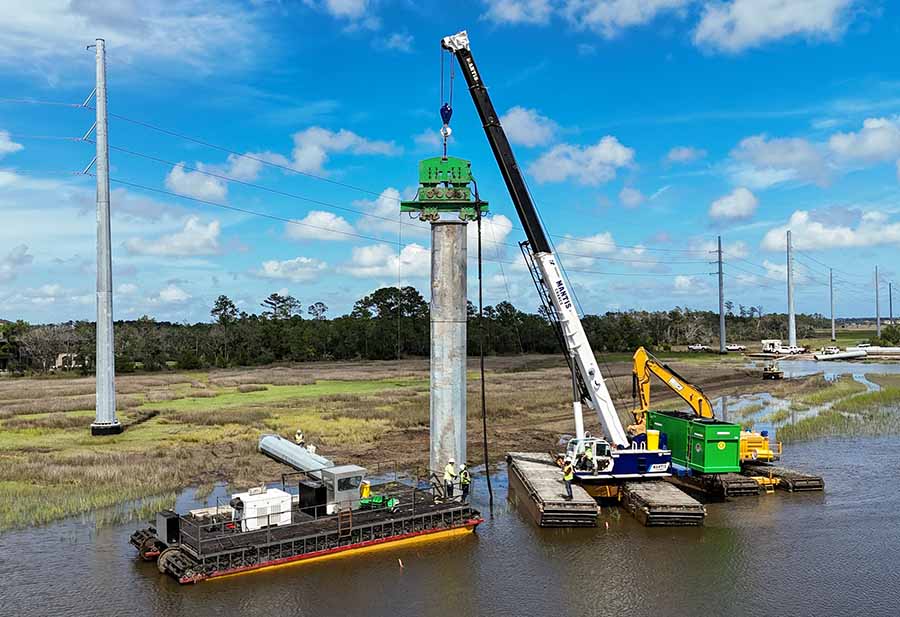
At Santee Cooper, delivering reliable, resilient power is central to our mission — and sustainability is part of that commitment. The recent completion of the Johns Island Transmission Project embodies both goals, strengthening the region’s electric grid while proactively protecting natural, cultural and community resources.
For years, Johns Island and the surrounding communities of Seabrook, Wadmalaw and Kiawah islands have relied on a single 230-kV transmission line for their primary electric service - a vulnerability that posed reliability risks, especially during severe weather events. To address this, Santee Cooper partnered with Dominion Energy and Berkeley Electric Cooperative to add important redundancy. Santee Cooper’s role was to construct a second transmission line, the Johns Island-Queensboro 115 kV project, that enhances service stability and grid resiliency.
“We recognized the reliability risk of having a single transmission source serving these communities,” said senior manager of Power system project management Shelley Burnette. “By adding a second line and creating a more diverse transmission path, we’ve strengthened the grid in a way that supports both resilience and long-term growth.”
Santee Cooper’s portion of the project spans approximately 5.1 miles, with nearly half using existing right of way and the remainder requiring carefully acquired new routes. By integrating the new line and interconnection with Dominion Energy’s infrastructure, we created a diverse transmission path that significantly increases reliability and operational flexibility compared with the previous single-source service.
Sustainability guided every phase of this project. In collaboration with environmental consultants, our team conducted extensive route analyses, considering environmental, historical and property impacts to identify a path that minimized disturbance to wetlands, cultural resources and existing land uses. The final alignment uses existing right of way when possible and implements best practices to protect freshwater and tidal wetlands — with no wetlands filled or destroyed as a result of the work.
Community outreach was equally central. Beginning with a public meeting in 2018 and continuing through ongoing dialogue with residents, landowners and stakeholder groups, we ensured transparency, sought input and adapted plans responsibly.
Energized in December 2025, the new transmission line now enhances energy reliability for thousands of residents and businesses, supports future growth and reinforces Santee Cooper’s commitment to sustainable, resilient infrastructure that benefits both people and the environment.