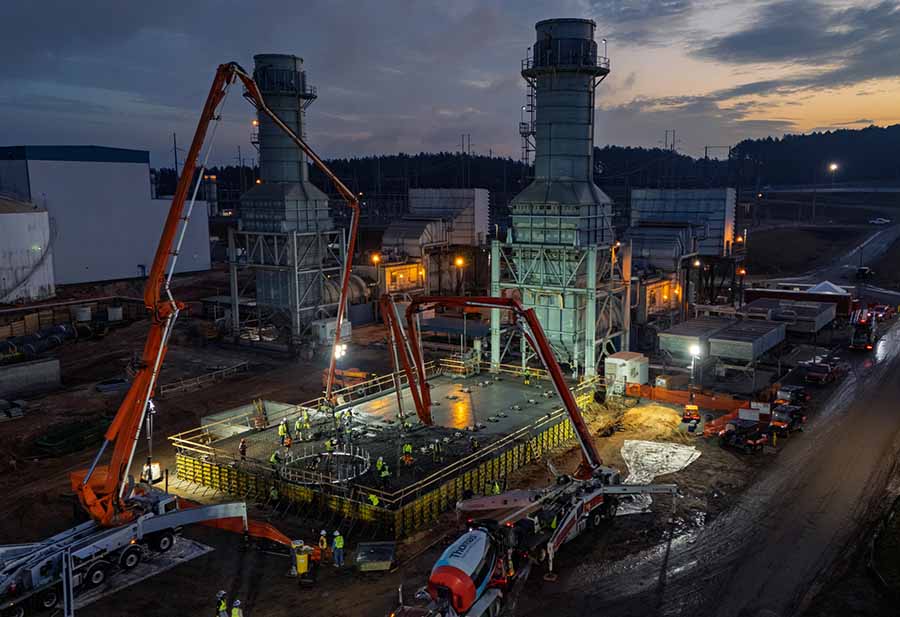
As Santee Cooper advances one of the largest capital construction programs in its history, the utility also is investing in strengthening project controls. New station and infrastructure construction is a reflection of South Carolina’s growth and the increasing demand for reliable, modern infrastructure. As investment levels have expanded, so has the need for strong oversight, clear processes and disciplined execution to reinforce transparency, accountability and long-term sustainability.
The scale of growth has been significant. In 2024, Santee Cooper’s capital budget totaled approximately $500 million. In 2025, that figure increased to $800 million. Managing this level of investment requires more than technical expertise. It demands structured planning, consistent forecasting and proactive risk management across a broad portfolio of projects.
“Over the next several years, we’re managing a volume of work unlike anything we’ve tackled before,” said Director of Project Controls Lionel Richardson. “We’re adding new infrastructure, modernizing existing assets and coordinating with more internal and external partners than ever. Strong project controls give us the structure and discipline to ensure projects are well planned, properly resourced and delivered on time and within budget.”
At its core, Project Controls integrates cost management, scheduling, estimating, forecasting and risk analysis into a unified framework. In 2025, the team focused on bringing greater consistency to these disciplines across the organization.
One of the most important roles of project controls is providing clarity to leadership. By evaluating cost estimates, schedules and risks using common standards, the team ensures decision-makers have a reliable and timely view of the company’s capital portfolio. Monthly forecasting updates and procurement tracking reports offer actionable business intelligence, enabling leadership to identify emerging issues early and adjust accordingly.
“When everyone is working from the same set of standards and expectations, it’s much easier to prioritize investments and deliver results,” said Richardson. “Timely, accurate information helps us resolve challenges before they escalate.”
As workload increased, the organization introduced more standardized templates, reporting tools and review checkpoints to strengthen alignment across departments. Enhanced interdepartmental communication also became a priority, reinforcing the idea that information sharing is essential to collaboration and accountability.
Consistency in estimating and early planning emerged as key opportunities for improvement. Differences in how departments estimate work can create portfolio-wide challenges, particularly as projects scale. Strengthening planning efforts, including permitting coordination and risk contingency analysis, helps improve forecasting accuracy and supports more reliable execution.
“Improving estimating and planning allows us to identify issues earlier and make better decisions,” said Richardson. “That consistency is essential when you’re managing a portfolio of this size.”
Beyond processes and tools, sustainable project delivery depends on people. In 2025, Santee Cooper prioritized building the capabilities of the Project Controls team. Employees participated in training programs focused on cost management, risk analysis and project management, while also engaging with professional user groups to stay aligned with industry best practices. The organization also partnered with experienced industry firms to bring additional expertise and mentorship to the team.
Cross-training became another important initiative. By ensuring team members understand the full lifecycle of a project, not just one segment, Project Controls strengthened its ability to provide integrated oversight across the capital portfolio.
Workforce capacity was also addressed. As the capital program expanded, staffing levels were evaluated to identify gaps and potential stress points. Experienced professionals were added to ensure teams had the bandwidth necessary to focus on quality and thoroughness, and not simply speed.
Technology enhancements further supported the year’s progress. Modern cost-tracking and project management platforms provided real-time visibility into performance and improved workflow efficiency. At the same time, leadership emphasized that technology is most effective when paired with clear policies and disciplined processes. Establishing strong program foundations ensures that digital tools enhance, rather than complicate, oversight efforts.
Risk management took on new importance too. Weekly meetings with departments responsible for significant capital spending allowed teams to identify emerging risks and develop mitigation strategies early in the project lifecycle. This focus on anticipation reduced the potential for schedule delays and cost impacts.
As project controls mature building trust across the organization remains a priority. Through transparency, collaboration and consistent engagement, the team is working to reinforce its role as a partner in successful project delivery.
“Project controls are not about policing projects,” said Richardson. “They’re about enabling success. Planning, forecasting and risk management create predictability and build trust, both internally and externally.”
Together, these changes provide more than operational improvements. They reinforce accountability for customer dollars, support informed leadership decisions and establish a disciplined framework capable of sustaining a rapidly growing capital program. As Santee Cooper builds the infrastructure needed for the future, strong project controls ensure that growth is managed responsibly - delivering reliable service today while protecting long-term value for customers and communities.