Santee Cooper to Begin Sturgeon Habitat Study on Santee River Oct. 20
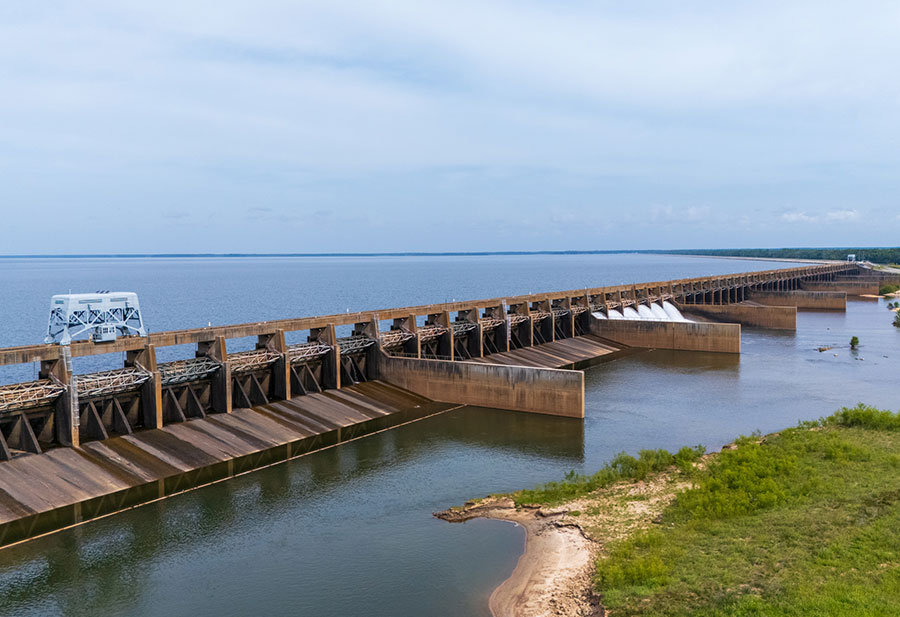
MONCKS CORNER, S.C. – Beginning Oct. 20 and continuing for approximately two weeks Santee Cooper will increase water releases through the Spillway to about 2,400 cubic feet per second (cfs), up from a normal flow of about 600 cfs. At this volume, the increased water flows will not cause flooding downstream.
The water release is a part of Santee Cooper’s work to study spawning conditions for endangered sturgeon in the Santee River as we prepare to implement increased water flows required in our new Federal Energy Regulatory Commission (FERC) license that governs operation of the Santee Cooper Lakes. The study, which involves environmental consultants and others, will assess the availability of spawning habitat along a 37-mile stretch of the river between the Lake Marion Spillway and the Rediversion Canal. These increased flows will provide the necessary channel depth for a sonar survey and simulate the conditions sturgeon will experience during increased flows during the spring spawning season.
During the test period of increased flows, environmental consultants will use advanced sonar to map the river bottom and identify areas made up of sand, rock, or cobble that could provide suitable spawning grounds for the sturgeon. The results will guide future stewardship of the river and help Santee Cooper continue to meet its environmental responsibilities.
“The goal of the survey is to determine how the new minimum flow regime will impact existing spawning habitat for shortnose and Atlantic sturgeon in the lower Santee River,” said Santee Cooper FERC Administrator Michael Melchers. “Both sturgeon species are listed as endangered under the Endangered Species Act, and we are required to support restoration efforts for both, guided by the National Marine Fisheries Service (NMFS) and in compliance with our FERC license.”
This effort will also serve as a trial run for new seasonal minimum flows that tentatively are set to begin early next year. Under these new requirements, 2,400 cfs will be released from Dec. 1 through April 30 each year during the migratory fish spawning season, with 1,200 cfs released for the remainder of the year. Santee Cooper’s current minimum flow requirement is 600 cfs, with no seasonal adjustments.